We specialize in the full lifecycle of secure quantum-resilient systems.
From design, development, validation, to deployment.

  • Our team of researchers and engineers innovate across the full computing stack, delivering quantum-resilient technologies ranging from low-level hardware primitives to complex privacy-preserving, frameworks, libraries, and applications.

  • Lattice-Based Cryptographic Primitives

  • Code-Based Cryptographic Primitives

  • Post-Quantum Cryptographic Extensions

  • Quantum-Resistant Hardware Libraries

  • Privacy-Preserving Machine Learning Systems

  • Private Information Retrival Systems

  • Lightweight Verifiable Computation Primitives

.

New!

FHEON: A Configurable Framework for Developing Privacy-Preserving Neural Networks Using Homomorphic Encryption

The entire team of PQC Secure is very excited to introduce FHEON. FHEON is an open-source, privacy-preserving neural network framework designed to simplify the development of encrypted machine learning models. Built on the CKKS homomorphic encryption scheme and OpenFHE, FHEON provides a suite of highly efficient, robust, and fully configurable neural network layers such as; convolution, average pooling, fully connected, and activation layers.
Each layer accepts a set of parameters familiar from traditional machine learning frameworks, such as input/output channels, kernel size, stride, and padding. This makes it easy to design arbitrary CNN models in the encrypted domain while maintaining a workflow that feels intuitive and conventional.
Beyond its layer implementations, FHEON includes a set of utility functions that streamline integration, reduce complexity, and accelerate adoption. Together, these components enable researchers and developers to build encrypted neural networks without compromising flexibility, usability, or efficiency.
Visit the FHEON documentation, featuring a comprehensive suite of examples, at FHEON Website, and access the code repository at FHEON on Github. We are excited to hear your feedback and ideas as we continue to improve the framework.

Research, Development, and Training Portfolio

Algorithms Design

We develop advanced variants of quantum resilient code-based and lattice-base cryptosystems. Our work includes a novel adaptation of the McEliece cryptosystem using non-binary Orthogonal Latin Square Codes (OLSC), and a Group Key Establishment Extension of Crystal Kyber (FIPS 203)

Learn More

Flexible Hardware Libraries

Our hardware libraries provides reusable and high performant low-level modules for different quantum resilient technologies. Examples include our FPGA-optimzed arithmetic operations for RLWE-based cryptosystems, and Zero-Knowledge Proofs (ZKP) hardware hash toolbox.

Learn More

Secure RISC-V Processor

We introduce the HERISCV Processor, an innovative RISC-V architecture designed for homomorphic encryption. It also delivers substantial performance gains for all lattice-based cryptographic systems with configurable parameters for diverse application scenarios.

Learn More

Secure Machine Learning

We employ the CKKS Homomorphic Encryption scheme to design and develop highly efficient, configurable, robust, and reusable machine learning operations required for privacy-preserving convolution neural networks inference and training applications developement.

Learn More

Private Information Retrival

Our work also Introduce novel algorithms and systems like VIPER that leverage advance quantum resilient technologies to effectively store and retreive sensitive private information from remote databases while revieling no information to the servers during storage and computations.

Learn More

Verifiable Computations

To address the complexity required in verifying outsource computations in quantum resilient systems, we introduce new complementary lightweight quantum Resistant verifiable primitives and protocols which are suitable for different application and deployment scenarios.

Learn More

Proven PQC Systems

Image

Foundations of Quantum Resistant Cryptography

We examine the mathematical underpinnings, real-time implementations, and hardware architectures of post-quantum cryptographic algorithms, guided by the NIST PQC standardization process. Our research addresses open challenges, attack surfaces, and the need for cryptographic agility.

We formally evaluate algorithmic performance, parallelism, worst-case security assumptions, memory efficiency, and latency. Our work spans lightweight lattice-based cryptography, ultra-low latency designs, and seamless integration with existing digital infrastructures.

Algorithm Design

Open-Source Hardware Implementation of PQC Primitives

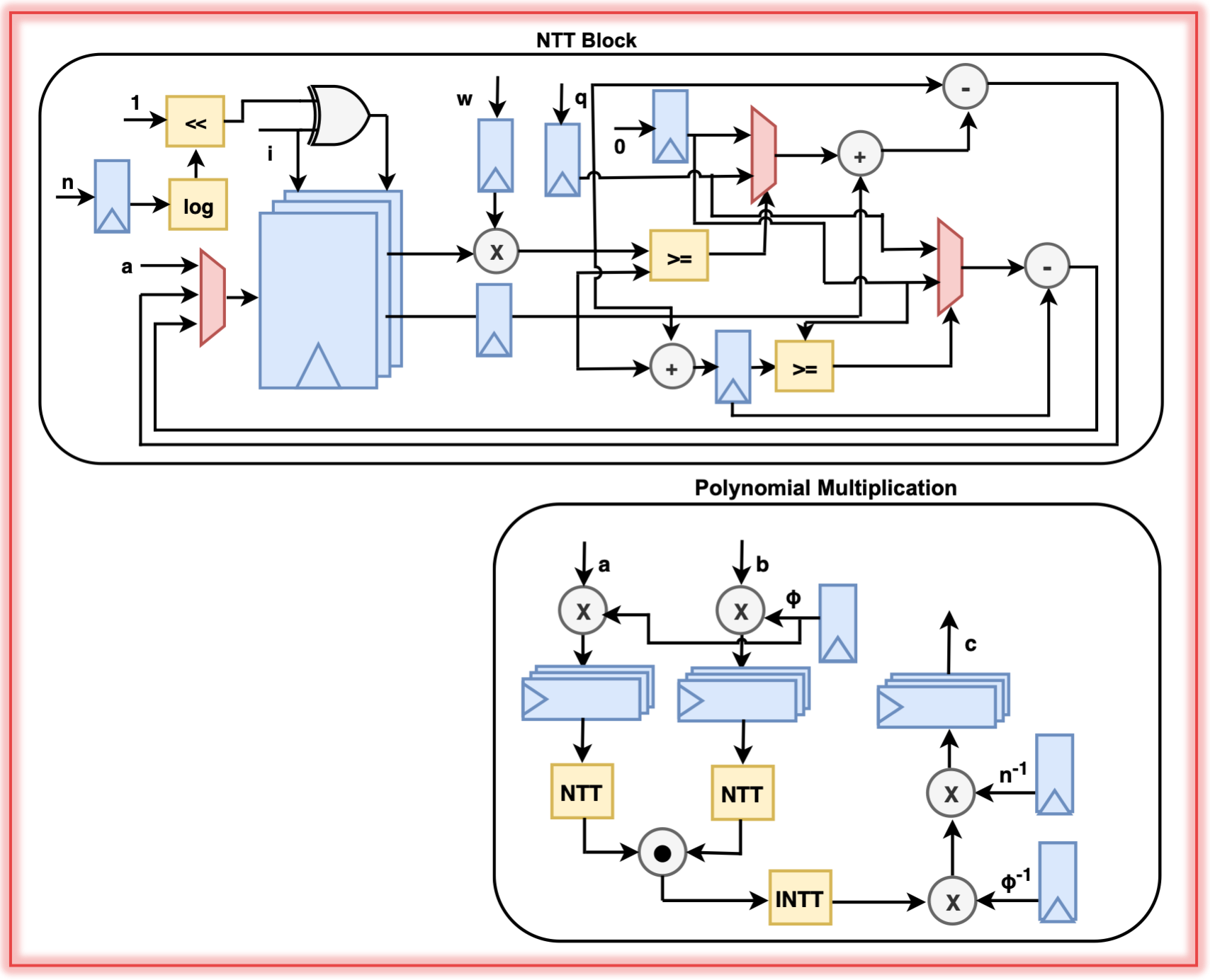
We have developed a collection of post-quantum cryptographic primitives optimized for FPGA platforms and commonly used security protocols. These implementations are specifically tailored to leverage the architectural strengths of FPGAs, incorporating algorithmic refinements that significantly reduce area and latency without compromising cryptographic integrity. The entire hardware suite is open-source, featuring synthesizable and fully verifiable RTL code. At its core, the design includes a highly configurable RTL framework equipped with an efficient n-point Number-Theoretic Transform (NTT) module, enabling rapid polynomial multiplication essential for lattice-based cryptography.

Hardware Designs

Image

Privacy-Preserving Computing Solutions

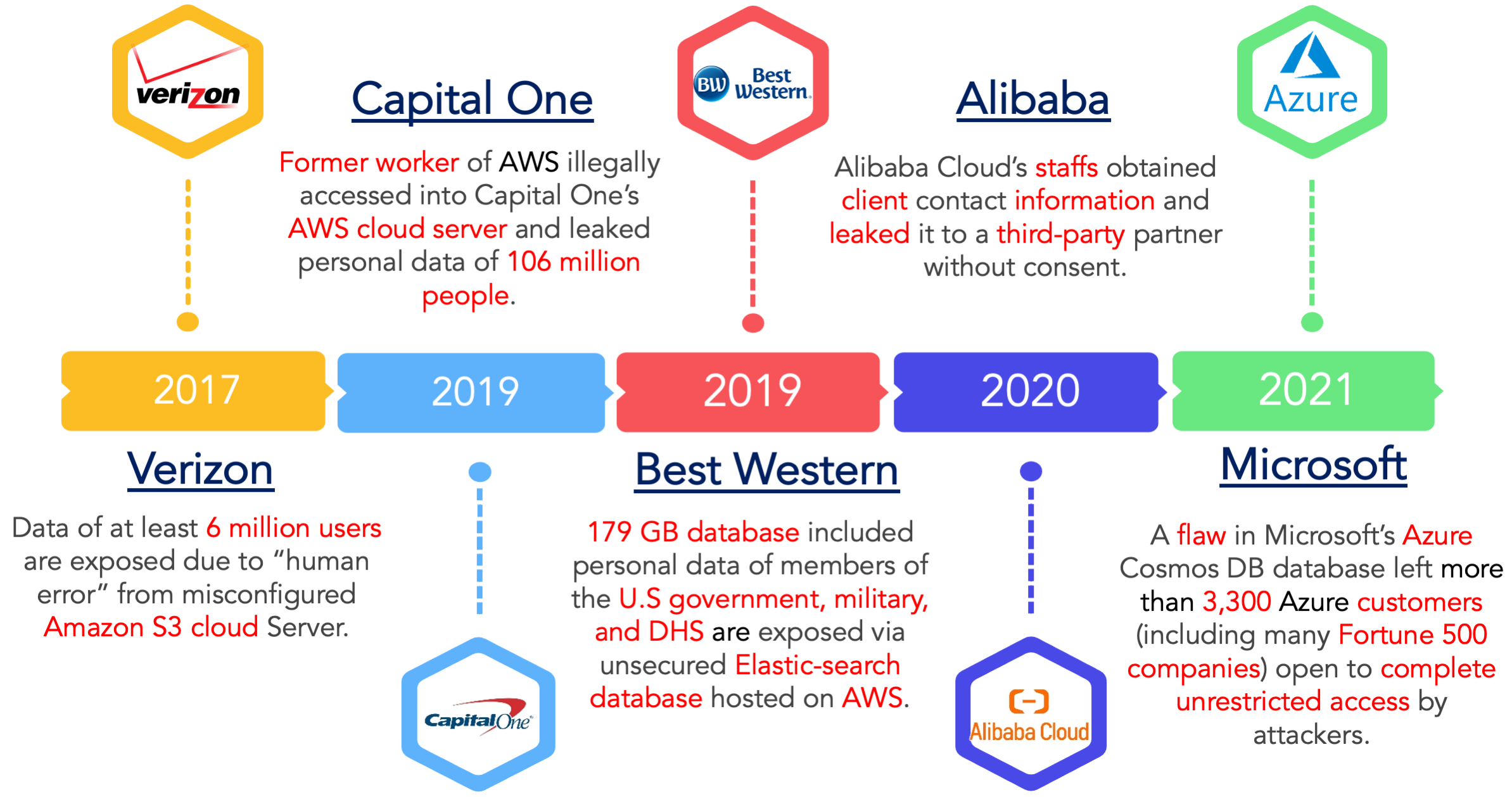
The proliferation of sensor-driven and connected devices has made cloud computing a ubiquitous service. However, data privacy remains a critical concern, especially in shared-resource environments.

With over 2,500 known cloud vulnerabilities, a 150% increase in five years, our work focuses on secure computational frameworks and end-to-end solutions that preserve privacy in outsourced computational and cloud-based scenarios.

Explore Solutions

Next-Generation Cryptosystems Design

We are committed to advancing the design of cryptographic systems that are resilient to quantum-era threats, integrating cutting-edge research with practical deployment strategies.

Loading...